Entry · Ref U4JBKMY3
What to check before booking an evening Falls outing
- Posted
- 2026-11-26
- Last amended
- 2026-11-26
- Account
- @myniagarafallsnighttourtalk
Evening visits to the Falls feel different from daytime trips. The水 moves with the same force, but the light changes the whole scene. Colours shift across the water, the surrounding paths quiet down, and the view can feel more dramatic after sunset. That change is also why a little preparation matters. A booking that looks simple on paper can turn awkward if the timing, route, or weather does not fit the group.
Before choosing an evening outing, look past the headline and check what the experience actually includes. Some plans centre on illuminated views from land. Others add a boat cruise, a walk along a pedestrian promenade, or time at an observation deck. Each option has a different pace, and each suits a different kind of visitor. The right choice depends on how much walking feels comfortable, how late the group wants to stay out, and what kind of view matters most.
Timing and what happens after dark
Start with the schedule. Night visits are shaped by sunset, seasonal hours, and the lighting schedule. In some seasons, darkness arrives early enough for a relaxed evening. In others, the start may feel late, especially for families or anyone with an early plan the next day. Check the stated start time, the meeting point, and the expected finish, not just the length of the tour.
Illumination is a major part of the appeal, yet it is not always constant in the way visitors expect. Weather, seasonal operations, and local events can affect what is visible on a given evening. A good niagara falls night tour should make clear whether the experience is built around lit falls, fireworks, or simply the after-dark atmosphere. If coloured lighting is the main reason for booking, confirm that detail before paying attention to any other feature.
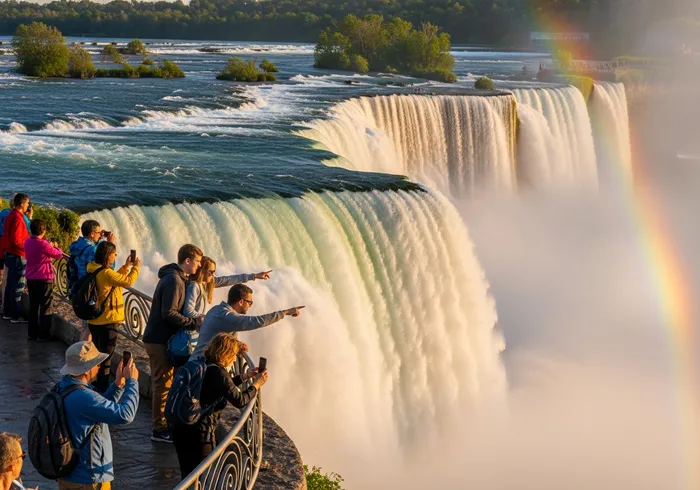
Fireworks deserve a separate check. They are often tied to a specific schedule and may not run on every night. If they matter, look for the exact days and conditions rather than assuming they are part of every evening. A trip that includes them can feel lively and busy, while one without them may be calmer and easier for photography.
The route and the amount of walking
Read the route description with care. An evening on foot may include paved paths, steps, ramps, waiting areas, and stretches with crowds. A pedestrian promenade can offer excellent views, but it also means spending time outdoors in wind and spray. Anyone with limited mobility, a stroller, or tight footwear should check whether the route is manageable and whether there are places to pause.
An observation deck changes the experience in a useful way. It can give a clearer, higher view and reduce some of the guesswork that comes with looking from below. On the other hand, it may involve lifts, queues, or timed entry. If the plan includes more than one viewpoint, check how transitions are handled and whether there is enough free time to take in each stop.
A boat cruise adds another layer. It can bring visitors close to the water and make the scale of the Falls easier to understand. After dark, the mood can be memorable, though spray and cooler air may be more noticeable. Check whether the cruise is included, optional, weather dependent, or replaced by another activity when conditions change. Also check whether the boat portion has its own boarding time, since that can affect the whole evening.
Meeting arrangements and group size
Many evening plans go wrong before the main experience begins. The cause is usually simple: the wrong meeting point, a late arrival, or confusion over what time to be ready. Check the address, the landmark, and the time requested for arrival. A meeting point near a busy area can take longer to reach than expected, especially at night when paths are less familiar.
Group size also changes the feel of the outing. A smaller group tends to move more easily and gives more room for questions. A larger group may feel efficient, but it can mean more waiting and less flexibility. If the plan includes a guide, check whether the guiding is live or recorded, and whether there is time set aside for questions. That detail matters when the route includes history, geology, or local context.

- Start and finish time: Check both so the evening fits around meals, rest, and onward travel.
- Meeting point: Confirm the exact place and arrive early enough to find it without rushing.
- Included stops: Look at the route, the viewpoints, and whether any activity costs extra or is optional.
- Access details: Check steps, ramps, lifting facilities, and places to sit if anyone needs them.
- Weather policy: Find out what happens if rain, wind, or spray changes the plan.
Clothing, camera settings, and comfort
Night conditions call for practical clothing. Even on a warm day, the air near water can feel cooler after sunset. A light layer, comfortable shoes, and protection from spray can make the difference between enjoying the final stop and wanting to leave early. Shoes with a firm grip are a sensible choice where paths may be damp.
Photography tips are worth considering before the trip rather than during it. Low light means slower shutter speeds, higher camera sensitivity, or a steady surface for the device. A phone can work well if the lens is clean and the shot is braced against a rail or wall. Tripods may be restricted in busy areas, so checking local rules is wiser than carrying equipment that cannot be used.
Think about battery life too. Cold air and long exposure settings can drain power faster than expected. A small power bank and a charged spare battery are useful if photographs are a priority. Keep the plan simple, though. The best view is easy to miss when too much time is spent adjusting settings.
Reading the details before committing
A useful booking page should answer plain questions. What is included? how long does the outing last? where does it begin? what happens if weather interferes? When those points are clear, the choice becomes much easier. Vague wording is not always a warning sign, but it does leave more room for misunderstanding.
Compare options by experience rather than by label alone. One plan may look shorter but include a better viewpoint. Another may last longer but spend much of that time moving between stops. For a first evening visit, a balanced route with clear timing is usually easier to enjoy than a packed schedule. For a repeat visit, a focused plan built around illumination or fireworks may feel more rewarding.
The most useful check is fit. Match the outing to the group, the season, and the kind of evening being imagined. If the aim is a relaxed view with time to photograph the water, choose a plan with fewer stops and more breathing room. If the aim is a lively night with several features, check that the timing leaves enough space to enjoy them.

A final check before the booking is made
Once the main points line up, look at the small print with a calm eye. Check cancellation terms, what is required at check-in, and whether any part of the route changes by season. Confirm that the selected date matches the stated operating pattern. Then choose based on clarity and comfort, not on a single attractive image.
A well chosen niagara falls night tour should feel straightforward from the first message to the last viewpoint. The Falls do much of the work. Good planning simply helps the evening run smoothly, so attention can stay on the water, the light, and the company nearby.